
museletter ⟠ into the storm (again)

A STORM IS COMING, I declared, eight years ago, in a keynote presentation at the Australian HR Institute’s national convention. (We’re in it now—and in this museletter I will share some thoughts as to “what to do.”)
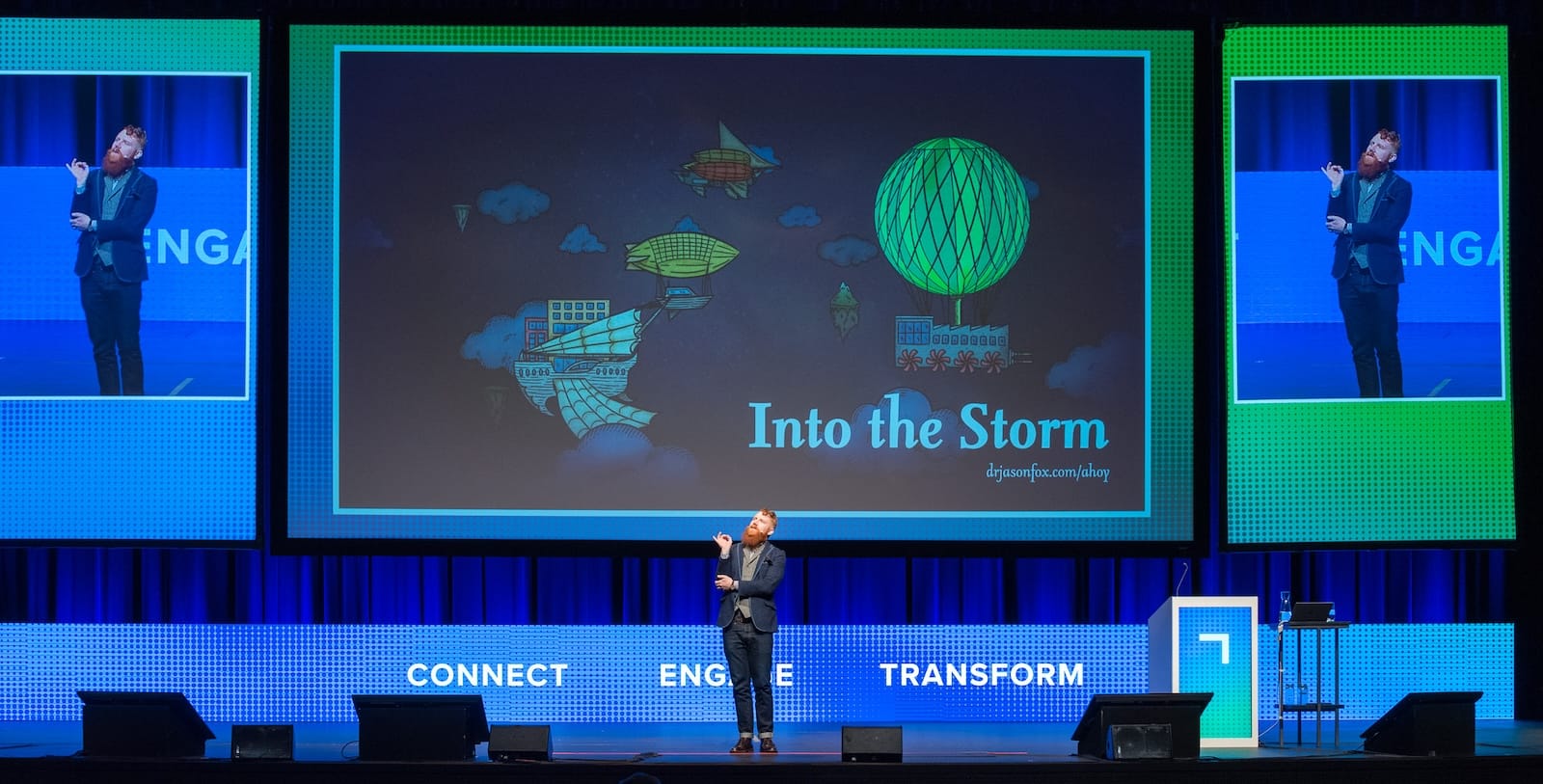
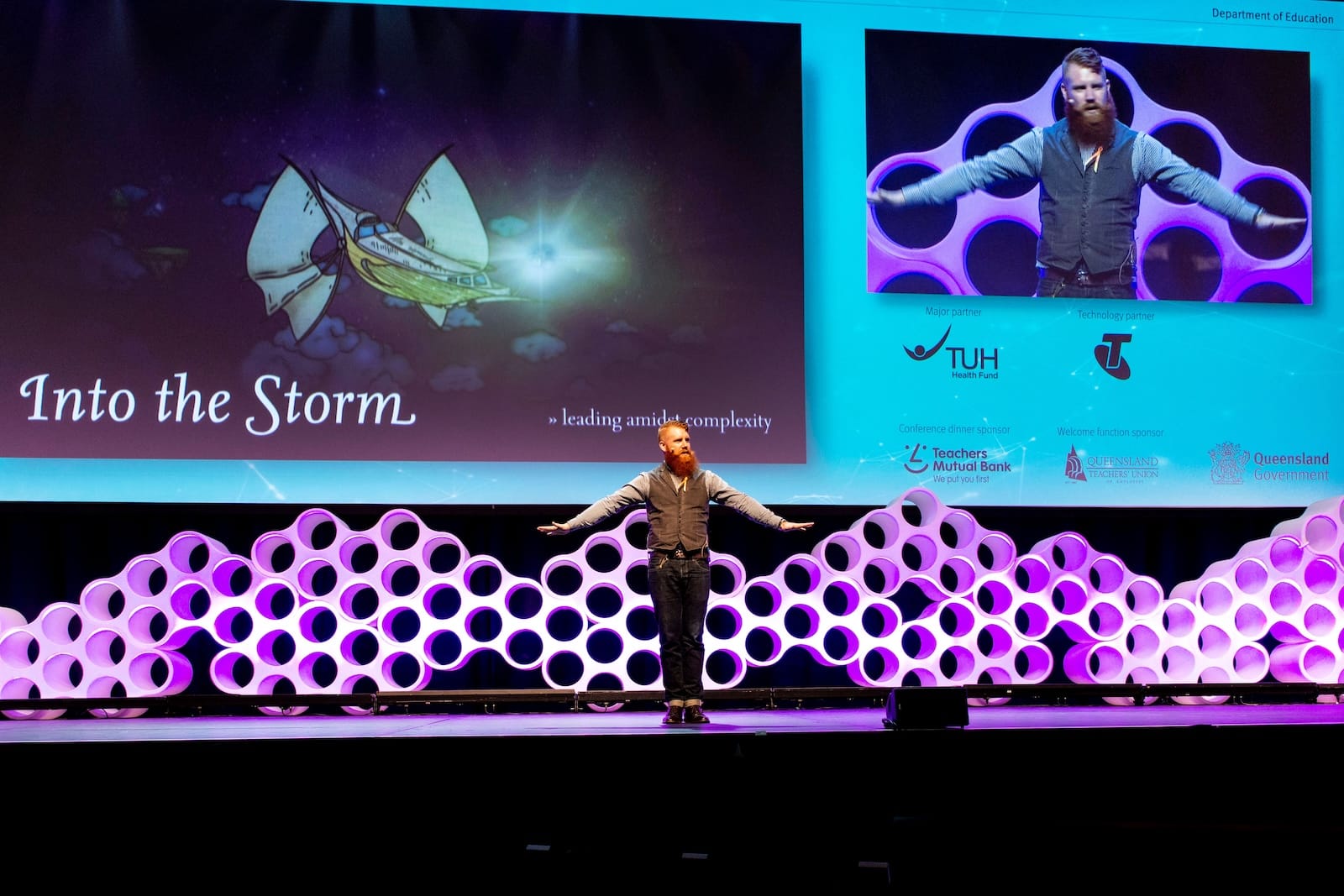
The keynote presentation was titled “Into The Storm.” Tomorrow I shall be speaking at the Australian HR Institute’s national convention once again. The title of the keynote they have requested is… “Into The Storm.”
This… has never happened to me before, lol. Not in the two decades I’ve been doing this wizard-bard thing. Normally, folks want a different keynote presentation.
But that’s okay—it’s great, even.
“Into The Storm” is what I like to think of as a placeholder title.* No two of my keynote presentations are quite the same, you see. There might be similar themes, sure. And like a good comedian, there’s a patterned craft to the myriad subtle ways in which humour is evoked. But none of this is scripted. Each “keynote presentation” I offer is a window into what’s possible. Something to start the conversation. All of my contributions are alive, awake and attuned to each unique context.
* Some event organisers need a title and description for their event program many months before we’ve had a briefing call. And so it’s always a delicate dance of conjuring something that’s captivating and compelling—whilst also not constraining for whatever the contribution needs to be. Ergo, titles like A Quest Beckons, Into The Storm, and Change the Game work well. Keynote titles like Unlock Mythic Mode and How to Be A Wizard are a little more niche; appealing to mature and sophisticated folk—but not as overtly “safe to buy” as other keynotes might be.°
° Actually, none of what I do is exactly “safe to buy.”† Everything is laced with the kind of generative ambiguity that’s enlivening for some and baffling for most.
† “Safe to buy” is usually a recipe for underwhelming success (at best).
Still: this has given me pause to contemplate my approach to this particular keynote, “Into The Storm”—eight years later.
I find it amusing and generative to consider how the future dances with the past; how history wefts and weaves its way into what is to become. For (as the saying goes) history doesn’t repeat itself—but it often rhymes.
But before we dive—into the mystery // of future history—some quick updates.
I’ve, uh, just been wintering. Genuinely, enjoying the winter. And also doing some consulting work with leadership teams. And also deepening into my own practice of what we might call “magic.”
Oh, btw, The Wizardly Riverwalk I mentioned in the last museletter sold out in minutes. I’m quite looking forward to this—but I also feel bad for those who would have loved to come but missed out this time.
Communitas (a Latin noun for the spirit of community) is something I am seeking to cultivate. I’d love to do this locally, IRL—but we cunning folk are spread relatively thin throughout the world. There’ll need to be an online hub—hence my explorations into The Dark Forest Operating System (DFOS). This is all easier to share in podcast format so… stay tuned to that.
But for now, we venture—
Deeper, Into The Storm
So there I was, keynoting to an audience of a thousand or so HR professionals, eight years ago, resplendent. My book, How to Lead a Quest, was a freshly minted “bestseller,” and I had been crowned Australia’s “Keynote Speaker of The Year.” Fortuna still smiled upon me (at the time).
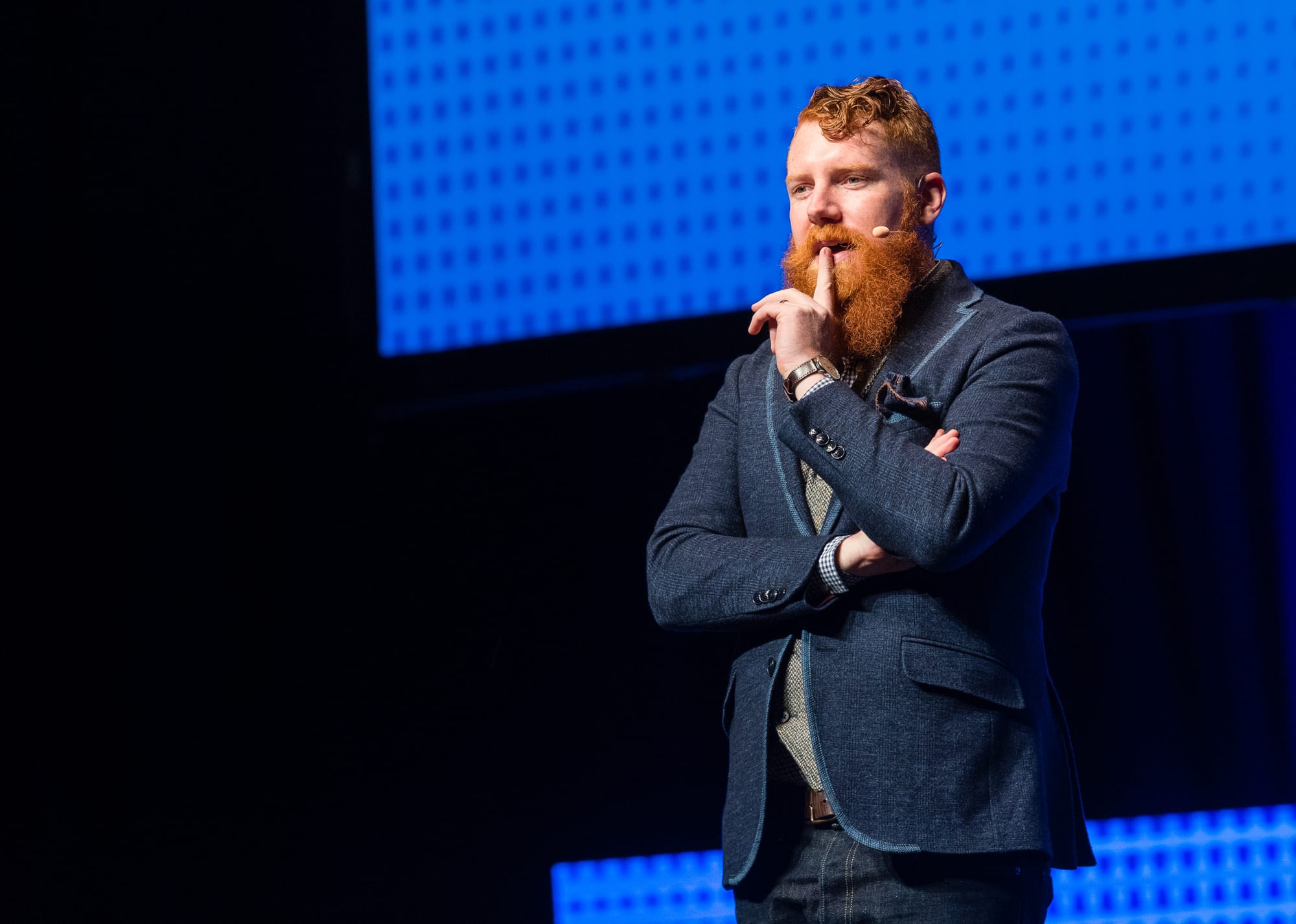
I was legible to the masses back then. I “made sense” to the lay. I still mostly operated within The Overton Window of acceptability. And I was still a year away from The Great Humbling that would see me descend into The Underworld.
At the time of this keynote I was serving as a kind of messenger. The message? A storm is coming (it’s already here).
I spoke of how the defaults we have become accustomed to have led to us being too busy to notice “The Inevitable Kraken of Doom” coming upon us. A beast that “feeds upon the sweet nectar of your impending irrelevance.”
I was very dramatic back then (still am). The kraken was (and still is) an apt metaphor for the kind of disruption you cannae see (until it’s too late).
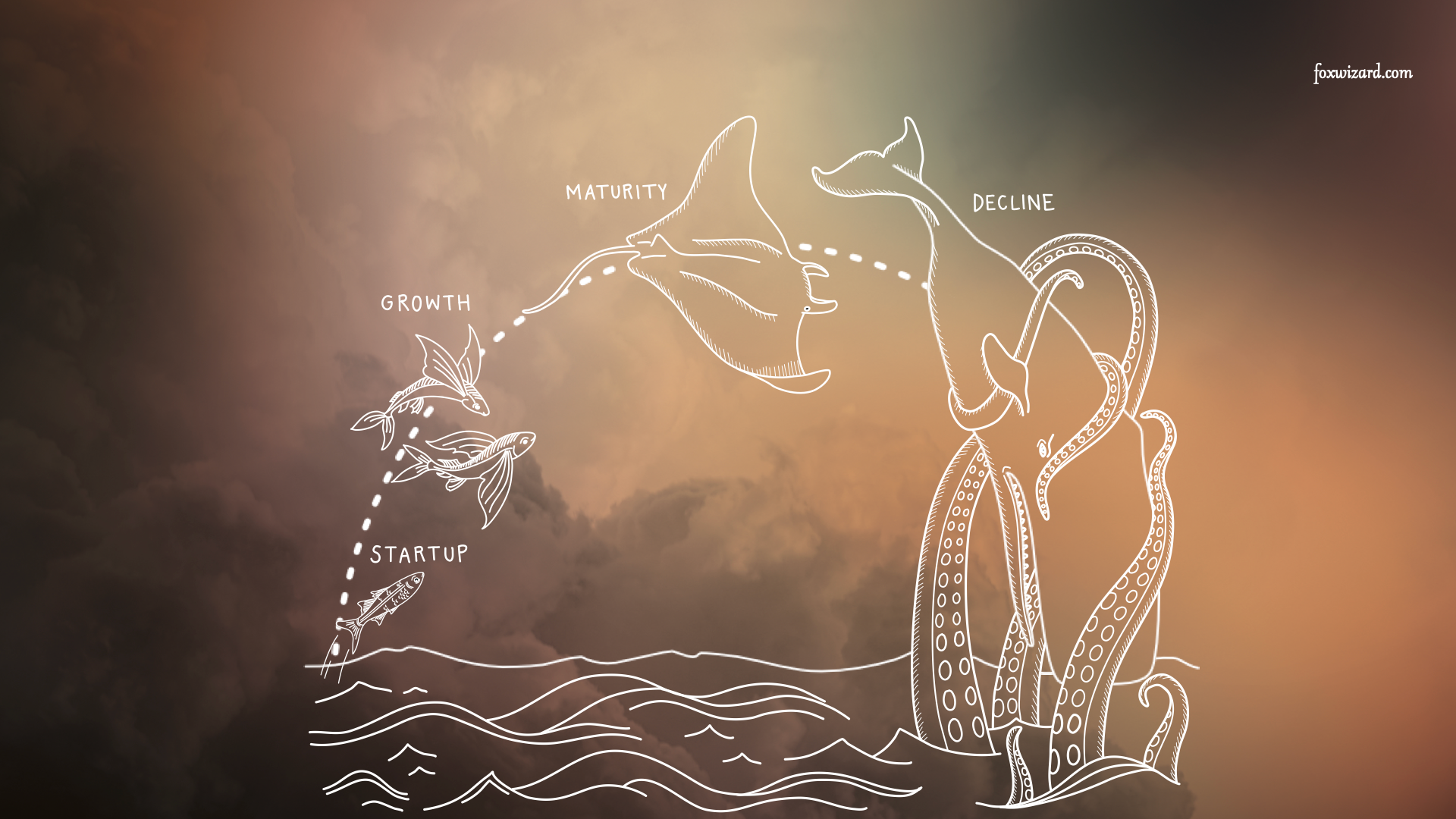
I don’t enjoy explaining metaphors. I’m disinclined to rob folk of the delight of making their own connections. But—it’s been eight years. So, to spell it out: the kraken is a metaphor for inevitable irrelevance. It’s the disruption that stalks us, unseen. We find ourselves in its clammy embrace when we succumb to the delusion of progress—a condition wherein default thinking eclipses and occludes our pursuit of meaningful progress.
I’ve spoken of this many times, but if you are new here and aren’t versed in foxwizard lore: meaningful progress is that which brings us closer to future relevance.
Only that which can change...
Now, I say the kraken is a metaphor for inevitable irrelevance—but it’s only inevitable if you aren’t paying attention. And if you don’t change what you are doing. For “only that which can change can continue…” (James P. Carse)
This was (and is) the thrust behind “Into The Storm.” A storm is coming—there’s so much criticality pent up within the world-systems we share.° A Great Change is upon us—we’re in the midst of it now.
° Since that keynote in 2018 we’ve had devastating bushfires, a global pandemic, ongoing wars and worse, net-zero targets abandoned, AI market psychosis, the rapid proliferation of surveillance and the collapse of the epistemic commons, incriminating Epşțeīn files being released (and ignored), and many signs that we are headed towards accelerated ecological catastrophe and a decline into corporate/fascist/authoritarian dystopia. So, I think I was right to say that a storm is coming (and that it’s already here). The question now is: what to do?
Here’s a sample of the kind of language I used back then:
There be no safe harbour.
No stability, certainty, simplicity,
nor clarity to cling to.*
This storm shan’t pass—it’s here to stay.
The tall will topple, the heavy will sink,
and the slow will sunder.
To survive, we must adapt.
But to thrive we must quest and venture
—deeper, Into The Storm.
* I was enamoured by VUCA back then. Volatility, Uncertainty, Complexity, and Ambiguity. And I still hold: it is beneficial to develop the sensibility and savvy to be effective amidst such—rather than only optimise for (the illusion of) stability, certainty, simplicity and clarity (aka the opposites of VUCA). But VUCA itself is only a mood ring—there are far more useful frameworks for the dynamics at play.
I hadn’t yet had my “metacrisis insight cascade”—that which behooved a disintegration of who I was and what I thought I knew.* Back then my frame was limited to helping organisations “flourish amidst change” (or some other equally cringe line that works on LinkedIn). I’ve since come to realise that The Storm we’re in—The Pickle, as it were—is much greater and more entangled than I could have imagined.
* I should also add—I’m well and truly out of the woods now. And it’s odd that I no longer feel I need to “convince” anyone of the metacrisis anymore. There’s a different way to live with this cursed knowledge.
But gosh I love “Into The Storm.”
The whole vibe of it. The D R A M A. What a [placeholder] title!
Sure, I guess some might consider Into The Storm to be ominous but… storms are powerful; enlivening!
Thunder & Lightning!
Do you feel it?? The charge upon the air? The thinning of the veil betwixt? The brimming of potency and potential? Even in writing this to you now I notice a vigour within me, my eyes gleaming, aspect.*
* ‘Aspect’ in this sense intransitively implies a state of ‘readiness to regard.’ An orientation without a specific object. Pupils widening before you know at what.
I have fond memories of chasing storms with my mum when I was young. I grew up by the ocean in the southwest of Western Australia. The weather there is quite patterned (especially in comparison to Melbourne)—you could see the cold fronts come in from the ocean, giving you time to hunker before the winds and rains (and sometimes thunder and lightning).
Not that we hunkered. We would almost always head Into The Storm, parking at the beach or on top of the hill so as to watch it all come through. The ocean would be thrashing, furious, hammering itself upon the basalt rocks, all awash in white foam, churning almost malevolently.
Actually, one time we watched forked lightning hit the power line directly in front of our house—cutting out all power to the suburb. I was quivering with excitement. You could feel the static in the air.
Yes—I go a little wild for storms.
Earlier this year I offered a piece of phenakite (freshly gifted to me via a long and wyrd thread of synchronicity) to Perun—the old Slavic god of sky, thunder, lightning, storms and rain (amongst other things). It was pelting down with rain at the time, and I was shirtless, on the rooftop, bearing a small Russian “high vibration” crystal (storm element) aloft with open palm, evoking Perun’s name.
Lightning immediately cracked very close to me, followed by fück-off thunder a half-second later, startlingly loud, and in that moment I yelped and knew fear and felt ridiculous. I also dropped the phenakite, which slipped through the rooftop deck and into the gutter, and then down the drain pipe for three storeys and onto the driveway that leads to our stormwater drains.
I spent the next few hours (with Kim’s help) on my hands and knees, searching at the base of the building for this tiny tiny (expensive and freshly gifted) crystal. It was wet and cold and storming and I had gone from the top of the world to down in the muck and... I was still loving it.
It was storming!
Here’s what I looked like (except much less beastly).
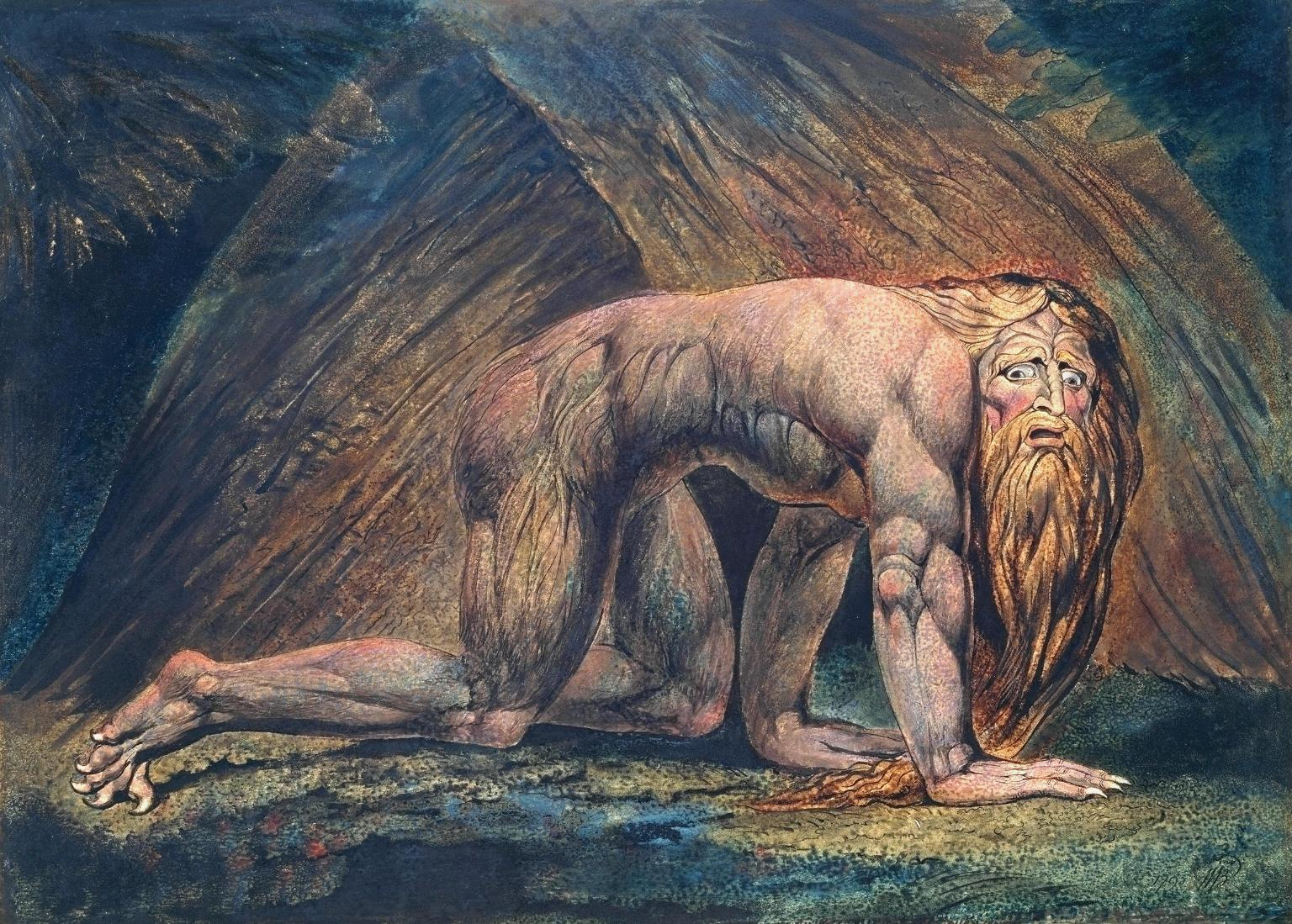
Petrichor—that pleasant smell that often accompanies such times—was abundant. I was hardcore imbibing petrichor, fiercely long-inhaling, nostrils and eyes flared. Petrichor! The blood (ichor) of the gods, released from the storm-blessed stone (petra). Heavens, I love it.
I don’t even quite know why I offered it up to Perun. I don’t know what possessed me. As far as ancient Slavic gods go, I feel more kinship with Veles (Perun’s “enemy”). Perhaps it was Veles who made the phenakite drop down—moving me from the sky to the muck. From the peak and heavens to—well, not quite the underworld. But to a more Earthly place.
Veles is the chthonic god of cattle, magic, knowledge, divination, and poetry—and a protector of travelling musicians. The resemblance to Hermes (patron of travellers, knicker of cattle) and other Trickster deities is, well... once you’ve a sense for it you glean it in most things.
And you know what Trickster does, right?
The Tower (XVI)
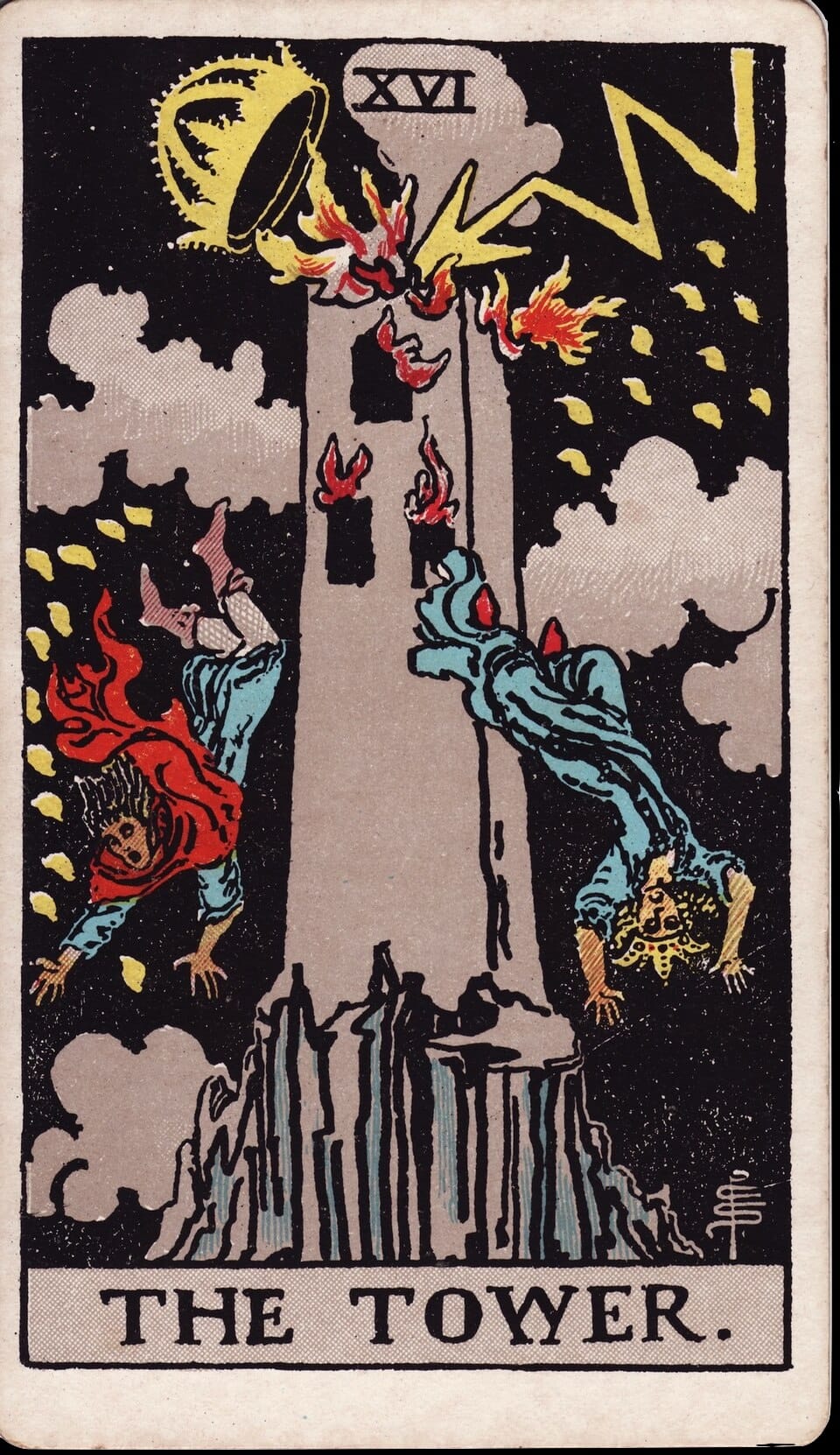
Okay so I have just revealed The Tower (XVI)—a tarot card that’s pretty dramatic. The Tower conventionally “represents” the result of hubris. A. E. Waite—the co-creator of the Rider-Waite-Smith tarot deck—associates The Tower with catastrophe.
THE TOWER (XVI) // Misery, distress, indigence, adversity, calamity, disgrace, deception, ruin. It is a card in particular of unforeseen catastrophe. Reversed: According to one account, the same in a lesser degree; also oppression, imprisonment, tyranny.
It’s a doozy.
But if we live in right-relations with Trickster, we don’t get The Tower card. We instead get The Dance: change that is in motion. Micro-dosing chaos and disruption as we go, folding entropy and variance into the dance; attuning to what is and moving with what emerges.
But if we eschew Trickster—if we treat dynamic and living complex adaptive systems as a fixed and machine-like system—then... well, we build our towers for a time, cocksure and confident. And they rise high—until Nemesis comes to strike us down for our hubris.
The choice is renewal or rot. And we are in “the rot economy” now. (Or “the Mordor economy,” if you prefer Nate Hagens’ parlance.)
I find myself, once again, contemplating the words of Josh Schrei’s Trickster Jumps Sides episode on The Emerald Podcast.
Trickster is a refresher of worn out systems, a challenger of idols that have gotten far too holy.
[…]
Systems, organisations, societies, communities, political parties, spiritual orders, even individual bodies perhaps, need to ritualise their own disruption and renewal—or they rot from within.
[…]
Any time any ‘ism’ comes along and gets a little too rigid, Trickster is going to come along and test the boundaries. Any time a social structure gets too comfortable resting on its own laurels and gets reluctant to look at its own dirt, Trickster shows up. Any time we think we’ve found the one world view to rule them all, Trickster says: not so fast.
From this lens, it could be argued that Artificial Intelligence is the disruption to so much of the “bullshit” work that plagues Enterprise Land. The work that looks like work but doesn’t add any value. From some perspectives, this kind of disruption is good. Finally! We can be rid of such egregious wastes of time, etcetera.
But... that would only be a small part of the picture.
Most folk only consider the impact of AI through their own perspective, and through the narratives constructed for us. And today, the way that AI is being spoken of as prophecy, and the way that so many leaders seem hoodwinked into AI psychosis... my senses suggest that it is this new belief in AI that is a little too confident and certain of itself.
I’d go as far to say that this is an accelerated perpetuation of the naïve progress narrative—a rich delusion of progress, narrow in its focus, blind to unintended consequences, power laws, energy, economics, capture, and nth-order effects.
And I would say most are blindly accelerating Into The Storm. Which... is actually the right direction to go.* But not blindly, no. Not when the kraken’s about. You’ll want to keep your wits about you.
* Some things need to collapse. Or rather: to decompose. Rot is the precursor to new life, and our world-system is due for it. We just need to try to minimise the harm as best we can.
This is the narrow path I spoke of before. The path all wizards, sorcerers, spellcasters, witted and wise folk must walk. The path that the Meta-Relational Technology crew encourage us to consider in “Questions we MUST and often DO ask about AI (and questions we MUST and often DON'T about ourselves).”
But at this point I don’t really know how far under the spell the assembled HR professionals will be.
Dare we get heretical?
I’ve already written about heretical leadership in the education sector. This has resulted in many private notes of encouragement from teachers and principals—along with acknowledgement that they are still in a bind.
But I wonder if the HR profession is so bound. Are folks ready and willing to entertain the heresy of going against the default prophecy-speak that “Artificial Intelligence Is The Future”?
Not to be “anti-AI” but... to acknowledge it’s in the field—and still something we can shape. This is heresy to The Machine, of course. But it’s also aligned to something other than reductive homogenisation and the logics of extraction and optimisation-to-oblivion. Something a little more in line with true Value, Eros, and Life Itself.
Nevertheless, it’s difficult to know where the profession is at. Certainly, the folk I work with are (broadly) switched on. Yet they self-select as clients; even amidst all of my antics and ambiguity. What of the rest of the profession?
“It has become outright dangerous to even raise the possibility that AI might not be the solution to a problem, let alone be the sole focus of a company’s entire strategy,” writes friend, writer, data engineer & ceo Nikhil Suresh.
“In every sufficiently large business we have observed (say, with 500+ employees), we have noted that continued advancement, and increasingly continued employment, has started to require repeated professions of belief in the transformative power of AI for said business. I am not talking about providing ideas about how to use AI in the business – I mean religious profession, declarations of faith. Overwhelmingly these statements are made by non-technicians, though it is not uncommon for technicians to emit deranged statements to curry favour.
There have been several occasions where I have seen someone, apropos of nothing, blurt out almost word-for-word “AI is changing everything”, only to concede moments later that their organisation does not currently use LLMs for anything, and indeed, that they cannot name a single thing that has changed other than they get some use out of ChatGPT (frequently the free-tier). In one extreme case, I have seen an executive confess that they had never even used ChatGPT or any AI tool in their life, immediately after producing a technical strategy for an organisation with $2B+ in revenue which was entirely centered around AI.
Initially these statements were so absurd on their face that I thought it was some cynical ploy to achieve thought leader status, and there are certainly some people doing this – I have had it admitted to me. But the broader reality is so much worse: people who have no background in the technology at all actually believe what they are saying. As a general rule you should avoid getting into business with a liar, but if you must, you can at least reason with them even if only in private. A true believer is much more threatening because they are impervious to even inducement by self-interest.”
That was a hefty direct quote! Good thing we are friends, ha.😅 You can read the full article: AI Mania Is Eviscerating Global Decision-Making. Nikhil and his team at Hermit Tech are whomst I introduce my executive clients to—the ones I am ostensibly ‘helping’ with agentic AI.*
* Assuming it’s not too late to help them. If they’ve still the glint of infinite play to them—and if their heart, soul and mind have not been fully sacrificed to M̸̧̼̯͆o̵͕͓̎̾̾l̸͚̟͍̝̈́ó̴̞̫̦̊̈́͘c̸͓͈̠̫̃̌̃ḩ̸͎̖̾̾͆͝ͅ and The Machine.
Nikhil is legit; ethical, intelligent and honest. It’s so rare to get all three.
I remember a while back lamenting—surreptitiously, with much cowardice—about intellectual honesty in the thought leadership arena. Or the lack of.
I outright implied that most “thought leaders” of this era—perhaps me included!—are either not honest and/or not very intellectual. Except not my friends and associates and acquaintances, of course! Hahaha! <adjusts collar> No but genuinely.
And not that it is just about thinking. Gods, I’m SO over overthinking (he says, 4,700 words into a 5,000+ word museletter).
But! We are now in a chapter where it is not commercially viable to represent a style of thinking that goes against the grain of The Market, M̵̦̱̮̄̿̿̚͜o̶̩͓͎̺̒̈̈͐ͅl̶͍͎̓̏͂o̶̲͍̤̒͜c̶̨̰̜̓̿ḩ̴̙̭̳̃̔̀͠͠ and/or The Machine.
Hence why this upcoming HR event is a tricky one for me. It is, effectively, a room full of the very decision-makers who hire folks like me. Should I hedge? Should I speak the cant of “The True Believers,” so as to be “safe to hire” for the warlocks at work, using key words like “agentic,” “100x” and “maximising”?
Pfft! Of course not.
But should I speak in two registers at once? That is: a fun keynote presentation that is insightful and practical with a lot of subversive truth smuggled in jest?
Ha; I already know what I’ll do.
So what will I do?
Ha, good question! Calling my own bluff already, nice.
Okay well FINE—I still don’t know what I’ll speak on or do.
But I rarely do.
In fact, the best presentations I do are almost always “channelled” with a kind of presence, poetic acuity and attunement to the confluence of the moment we’re in. It doesn’t pay to go into a room with a fixed sense of how things “should” play out, nor does it favour you to go in with a polished and perfected powerpoint deck. That’s Tower (XVI) Thinking.
But! I do believe in “being prepared to wing it.” (Emphasis on prepared.)
I can already feel the shape of it. But I’ll be on at the end of the first day so I’ll need to provision for what the day itself might unfurl. Who knows what kind of egregore might be summoned before I’m even on?
Much of the work of preparing to wing it consists of the following:
- Sleeping, exercising and eating healthily in the lead-up to the event
- Minimising exposure to LinkedIn and other social media
- Maximising exposure to relevant conversations and essays
- Maintaining a practice of writing/journalling, meditation and long walks
- Cultivating mythopoetic (and “magical”) attunement to wyrd
Daily, I’m immersed in all of this naturally. Weekly, I’m amidst different client contexts—noticing underlying patterns and novel anomalies.
Very little, you’ll notice, has to do with the presentation (the “content”) itself. Preparing too much here is actually the temptation and the risk. This is what results in something being “overcooked.”
A friend and mentor once upon a time shared with me that every time you rehearse for a keynote presentation, it’s like opening the bottle of a fizzy drink. Rehearse too often and it’s like opening the bottle too many times—there’ll be no effervescence left come the real thing. Your delivery will be flat, with no sparkle or fizz. (I might be misremembering this, or afflicting the anecdote with my own bias—but it’s something I hold to.)
These days most folks aren’t even rehearsing for the live audience in the room. They’re rehearsing—with scripts and more—for the video that is recorded and shared more widely, TED-style. Or, worse, they aren’t even rehearsing for the whole presentation video because they know (perhaps wisely) that our world’s attention span has reduced to that of a fruit fly. Thus they rehearse—and optimise for—the pithy soundbites that can be featured in short-form video content. This makes for a string of pithy platitudes and hot-takes, laced with very generic advice.
But look at what I did there—I said “they.” Tsk, tsk, Jason, for there is no “they”—it’s all we. We’re all in this together; entangled and entwined.
WE IS ALL AM.
So what will I tell folks to do?
“Do as I say—not as I do,” lol.
But nay—I don’t tell folks what to do. Who does that? Can you imagine? I dislike to even give examples or practical tips for what you might do. Unless, of course, there’s room to provide at least three. (I’m exaggerating here, but really: I don’t like to rob people of their epiphanies. Give someone an epiphany and, well, they may or may not do anything about it. But create the conditions in which epiphany is more likely to arrive to them—and of their own realisation—and lo! The whole arc of a life can change.)
A keynote ought serve as warm provocation and enlivening perturbation. The role of keynote speaker is to provide a captive adult audience with external (non-obvious) insight and Ways Of Seeing whilst also cultivating the conditions that might lead to a quickening. That is: the realisation of latent potential, or the realisation of an insight cascade that alters an audience’s field of perspective—and thus blossoming new optionality and affordances.
I certainly don’t have all the answers here. And I’m suspicious of those who claim they do. We’re in the storm now.
Wild storms oscillate between being complex (wherein there’s pattern enough to discern, if you attend and attune) and chaotic (wherein there are no discernible patterns to guide you). A truly wild storm is a context that de-privileges expertise.* No one knows exactly how this is going to play out, it’s all hectic.
* Hat tip to Dave Snowden for this framing.
The advice I would indirectly imply to HR leaders, ergo, is ambiguous and fourfold. (Yes, fourfold—I’m trying to break spells here).
- Keep Your Wits About You. I say this a lot, I know. But it bears repeating. We are living in a time of corrupted epistemic commons, information hazards, synthetic content—with predatory surveillance platforms as the primary form of propagation. Now is the time we come to our senses, and trust in the deeper patterns we attune to.
- Relish In The Complexity. Firstly: ‘complex’ is different from ‘complicated.’ You know that, right? Most folks conflate the two. Complexity also goes hand-in-hand with simplicity, if you know where to look. My point here is: we must rise to the complexity of our times. Humans can do this so well, whereas machines often struggle. Yet... if our orientation is towards reducing complexity then... we just make it easier for the machines. And much fidelity is lost in the reduction. So: rise.
- Fall In Love With Wisdom. Some might call this having a philosophy. Not in the sense of having a doctrine or a set of explanations—but genuinely: a love of wisdom. And whilst our economic system vastly outpaces wisdom, still: find your way to love wisdom. Even if it’s a secret thing.
- Heed Thy Calling. This is easier said than done. Or is it? I’m still reflecting on the words from David Whyte I shared in a museletter almost exactly 12 months ago. “Ambition left to itself [...] always becomes tedious, its only object the creation of larger and larger empires of control; but a true vocation calls us out beyond ourselves; breaks our heart in the process and then humbles, simplifies and enlightens us about the hidden, core nature of the work that enticed us in the first place.” I work with a lot of ambitious folks, and ambition certainly has a place in Life. But ambition can sometimes blind us to the bigger picture. And for HR professionals, I wonder if we are collectively working towards a world in which there are far fewer humans employed. Would such a world even need HR professionals, or would they drop the human part—the “H” from “HR”? My hope is that some folk remember the core nature of the work that enticed them in the first place.
This advice holds for all leaders, really. Particularly if you work within The Machine. You must walk the narrow path. Deny power and you’ll swiftly lose your job. Embrace power—without the wit, wisdom and wiles of fox wizardry (or equivalent)—and you’ll be hollowed out by The Machine. It really is a narrow path betwixt the two. It’s the third side to every coin—the side that most forget about. The side we spin on when a coin is flicked, oscillating so as to be both things at once—and something else entirely.
Oh how the heck am I going to convert these wily wisdoms into legible form? As ever—we shall see!
On a more sober note, I do want to attempt to codify some of the sensibilities and practices that enable complexity practitioners to be effective liminal agents. And I’m also growing particularly tired of my repeated excuses for the delays in The School of Fox Wizardry, The Rogue Wizard Guild, the next book, the next season of the podcast, and so on. I seem to have worked myself into my own kind of bind. Wily as I preach, I’ve made a trap for myself, in that as a practitioner, the work I do with clients takes me away from my work in other domains. The experience is a kind of “temporal lumpiness”—nothing fits into a smooth linear plan, and the gods laugh at my many forgettings of this.
You might notice that I have just now broke my streak of publishing on the 1st day of every month. I managed to get four in a row! But as I oft allude—four is the spell breaker. What do I even mean when I say this? This is why I need to make the school.
A new season is nearly upon us. And whilst this particular storm will be a high-level theme for civilisation over the coming decades—at a more local level there will be many clearings within which the sun will shine, and the petrichor will make itself known. I live for such.
As ever, thank you for being with me.
Warmth,
Jason
PS: A new episode of The Kindred Spirits Podcast just dropped today! Watch it here, or listen on Apple Podcasts or Spotify.
Member discussion