
The “sacred contract” betwixt writer & reader
This is an attempt to articulate why I experience a subtle feeling of “betrayal” within me whenever I read an article or essay of compelling premise... only to encounter that creeping—and then unshakable—sense that: this was written with or by a Large Language Model.
It’s not the em-dashes.[^ But it is the “it’s not the.”] I love the em-dash. My hands instinctively know the “option+shift+hyphen” keyboard shortcut that conjures the em-dash. I pity the hyphen that attempts to play the dignified role of em-dash, for they’ll always fall short.[^ If you give them a little space, the en-dash can rise to the occasion—but I know they prefer the company of numbers to words.]
A quick defence of the em-dash
Em-dashes have long been a sign of writerly erudition (at least, in my experience). Virginia Woolf, Friedrich Nietzsche, Edgar Allan Poe, and Emily Dickinson are just a few examples of those who use the em-dash with a natural grace. The em-dash, ergo, has a long and respectable pedigree as the punctuation of “thinking in real time.”
To the contemporary metamodern writer, the em-dash also allows for irony and interjection. This can be handy if you are attempting to articulate something complex and want to ward against undue concretising or reification, premature foreclosure, or other expressions of thought in which the generative ambiguity and possibility-space might otherwise be collapsed. The em-dash, in this way, helps to keep thinking alive on the page.
Do I like that em-dashes are now the key sign that villagers look for when on the witch-hunt for AI? Not at all. It saddens me to see the em-dash reduced so. Much as how politicians might pin blame on hardworking immigrants. The em-dash is not the issue.[^ Relatedly, I am sad to see words I love—like ‘delve,’ ‘liminal,’ and ‘threshold’—be rendered so common as to become “load bearing” parody. Soon the LLMs will come for my beloved ‘betwixt,’ I know it.]
My hypothesis is that em-dash faded from popularity because many folk no longer read literature, and it’s simply easier to add a mere hyphen “ - ” than it is to do the “option+shift+hyphen” cantrip that summons the em-dash. The energy gradient, ergo, leads most humans to favour the hyphen. But LLMs don’t type, and so the em-dash is used because it is the right punctuation to use.
Now, back to the betrayal
The mild sense of betrayal I feel—a mix of anger and sadness—comes from the realisation that creeps up on me and whispers: perhaps you are devoting more time and attention to what you are reading than the author did in writing it...?
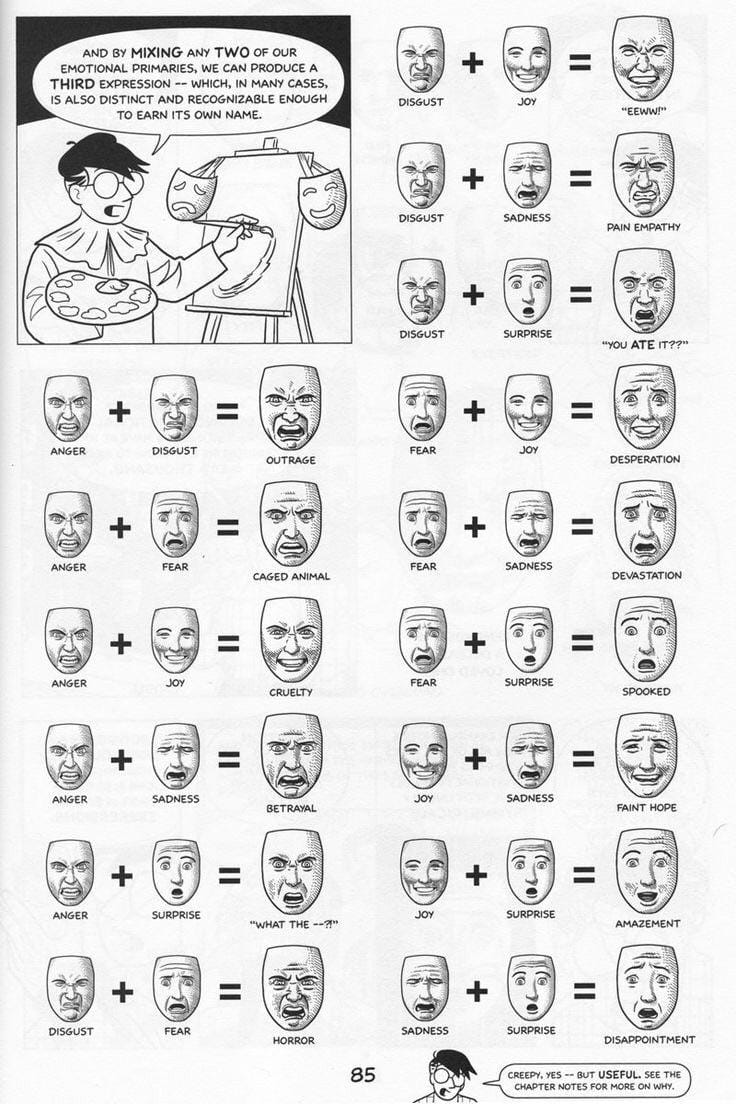
“Who cares!” I have seen many an AI-evangelist posit, in response to such. “If the ideas are good, who cares if AI was used to help write it.”
Well, me? I care. But not in the brow-furrowed Ivory Tower prickly-precious academic intellectual kind of care. The betrayal stems from something more akin to a sense of subtle violation of what has felt like a “sacred contract” between writers and readers.
The “sacred contract”
For thousands of years, the act of writing something was generally much more “costly” than the act of reading something.[^ In the sense that it takes more to write something than it does to read it. Unless the writing is particularly atrocious.]
And whilst I don’t want to overly valorise toil, I shall do so anyway: writing that is filtered via experience has a quality of being lived and attended to. There’s an animacy to it—a living wyrd relationality—that synthetic writing (that is, writing generated via Large Language Models) can only ever emulate as simulacra.
The “sacred contract” is not simply the equation of “{time spent to write} > {time required to read}.” It’s more complex than that.
The “sacred contract” is more something like:
What asks for your attention was itself attended to.
It’s subtle; clearly felt, yet difficult to ascribe to any particular thing. It’s an animate, relational, felt-sense to the writing itself.
For example, a poet—through attendance to living and Life (in amidst its beauty and terror)—might have the acuity to recognise and attend to Inspiration when it arrives. And if they are Present to such, it may be that they can convey the Aptness of the Experience into quintessential form. This might only take you a moment to read—but its Affect could last you a lifetime. The writing itself was attended to.
And so when I read an essay with a compelling title and premise, only to find—a few paragraphs in—the usual myriad subtle tells that this writing has been generated via machine... I find myself viewing the whole piece askance. And this is happening a lot these days.
Was the writing attended to?
Sometimes, yes! Very much so. I’ve read many a piece of centaur-generated writing that has been worthy of highlight, thanks to the novel framing and a clear sense that the writing itself was attended to. But this is rare.[^ Or maybe it’s simply because my work seemingly requires that I manifest on LinkedIn, and thus I have an unhealthily high level of exposure to synthetic content and slop. In fact, I think it’s that.]
The subtle sense of betrayal does break the spell.
I probably ought be grateful so as to not be so readily hoodwinked.[^ At least, in some domains. Being a wizard proficient in The Schools of both Illusion and Enchantment does render me somewhat more proficient at detecting such.] And it might just be that in my profession I must be particularly alert to the perils of the noösphere. But still: I’m annoyed to have been “tricked” in the first place.
And I understand that not everyone is trying to deceive. Like the sorcerer’s apprentice, many of us now marvel at the ease with which content can be so readily conjured.
After all... why not? Why shouldn’t we all use LLMs to write for us?
Add to the fact that we live in a late-stage attention/distraction/surveillance “lemon market” economy where content optimised for the algorithm “wins” whilst knowing all of this is subject to Brandolini’s Law[^ Aka the bullshit asymmetry principle, wherein the energy to refute bullshit—an indifference to truth—is an order of magnitude larger than the energy required to produce it.]—and we have a recipe for an acceleration of the epistemological disaster we already find ourselves within.
This morning I read a fresh post from Mandy Brown of A Working Library. It would seem that I am not alone in this betrayal-feeling.
“[...] But when we read a text created by fake intelligence, we find not a mind but a forgery, and a glib one at that—a thin, transparent skin wrapped around an empty void. We are right to be repulsed.”
But amidst the tsunami of slop, there is a silver lining.
Learning to swim
The rapid acceleration of development and investment in artificial intelligence is revealing how power works. It is having more of us awaken to the distinction between what is convenient and profitable in the short run—to what is good for us, and what we actually value.
Some of us do not want to become “reverse-centaurs,” nor thralls to the shoggoths that reside beneath it all. Some of us would rather not see writers, musicians and artists exploited, industries hollowed and colleagues automated out of work. And many more of us are beginning to relish in the analogue aspects of life once more. The friction of genuine encounter; the grit, texture and delight of community.
“Wise discernment” is becoming a more noticeably expressed sensibility—and this is a good moment for me to deploy an em-dash to declare that the practice of wise discernment might actually involve a deepening engagement with (and potential appreciation for) writing that has seemingly passed through a large language model. Maybe! I have highlighted many an essay that was clearly written with the assistance of a large language model. And whilst I the tells were disturbing—the content itself was still, on the balance, insightful enough for me to persist. Because the writing was still evidently attended to. There was, I could sense, a sweet residue of toil behind it all. Which, I maintain, I shall not valorise. The writing was inhabited. It had animacy to it yet still.
I think of it like this. A friend bakes you a cake from scratch and it’s wonderful. And maybe sometimes a friend makes it from a packet but says they made it from scratch, and that’s okay! Cake is great. And sometimes a friend might just buy it from a store and say “look at what I made”[^ Fine I didn’t make it but I chose it; they were my prompts.] and that’s weird and a bit sad and everyone can tell. But if you’re hungry and you like cake and you don’t mind that regret-inducing feeling of cake-made-by-a-machine then, hey—who can look a gifted cake in the mouth (and eat it, too)?
But having honoured the edge case, I anticipate we shall see more and more slop. And the formulas and patterns will become easier to recognise. And then the models will get better—but also more expensive. More efficient but harder to use well. Using large language models will become ever more smooth and treacherous.
And this will lead us—more of us, at least—back towards a healthier relationship to writing, reading and relating. That’s the hope, at least.
Fox as “the writer’s totem”
In her book—Fox—Dubravka Ugrešić (an exiled Croatian writer once upon a time harassed as ‘a witch’) quotes the Russian writer Boris Pilnyak:
“The fox is the totem of cunning and treachery. If the spirit of the fox enters a person, then that person’s tribe is accursed. The fox is the writer’s totem.”
Does this mean fox = bad?? Nay—perish the thought! Ugrešić continues:
“What, for example, are we to do with the central symbol of Pilnyak’s story, with the fox? […] In today’s social codes, Pilnyak’s fairy tale about the ethics of the writerly trade, about the fox as totem of treachery, would be read in reverse. The motto of the present would go something like: the fox is the totem of cunning and treachery: if the spirit of the fox enters a person, then that person’s tribe is blessed! The fox is everyone’s totem, there are no privileged few!”
Ugrešić knows the wily trickster-spirit of the fox.
One might read this as thus:
If “fox is the totem of cunning and treachery” the correct response is—keep your wits about you!
Fox enlivens dynamics by having folk be alive, awake and attuned to what’s at play. This is why writers—folks who love the craft and vivifying magic of writing, and who love reading—are usually the most outspoken against AI. It’s why writers are usually the ones witted enough with the cunning to sniff out synthetic writing.
Into the dark forest we go
Whilst this cacophony unfurls in all of its manufactured and haphazard and devastating sophistication... more writers will discover their own voice once more. And more readers will fall in love with those who write and share in their own voice. And then a different quality of connection will be remembered and will re-emerge.
This will likely go underground—into the mycelial underwebs of the dark forest. We might be seeing the seeds of this in the private internets of the dark forest operating system.[^ Yancey Strickler recently shared a great presentation on the very topic. Here’s a quote: “This is why everything public is an ad and everything private feels real. Every time I tweet something or post on Instagram I’m effectively creating an ad for my work. That’s the reason I’m doing it. When I share in private channels, I’m being honest with people I care about.”] And there are, of course, pockets of the wild independent web that have never been domesticated. This is where I intend to live and read.
Member discussion