
Conditions, not solutions
Sometimes, a prospective client will want to know the outcomes of our work together before we have begun. This is reasonable; and a logic that makes sense in Box Land, where everything is made to fit within boxes.
But a promised outcome…
… can only be deduced if we follow a linear process.
In Box Land people front up to work in their boxes (cubicles) to work on their rectangular boxes (screens) in order to tick boxes (KPIs and OKRs). Like in the novella Flatland, wherein the characters of a two-dimensional world struggle to comprehend higher dimensions, so too the people of Box Land struggle to comprehend qualities that don’t fit within boxes.
Which is perfectly understandable—the paradigm we are in skews towards metric obsession. What gets measured gets done, and inversely: that which cannot be readily measured cannot be valued. Box Land thus works within ‘bounded ways of seeing’.
And this logic works for formulaic work within closed systems, where all parameters are known, where each component relates to other components with linear predictability, and where diagnosis can be both precise and prescriptive. In this context, a solution can be promised. If your printer or car stops working, it is very reasonable to assume: it can be fixed.
But for complex work within open (living) systems, where the relationship between components is dynamic, non-linear and irreducible, and wherein the work is itself nested within a larger complex and dynamic system—promising outcomes and bringing external ‘solutions’ is fraught.
What tends to happen is we get half-solutions that create new problems. Or fads that temporarily work, but do little to shift the underlying substrate.
Nebulous Qualities
When a prospective client asks me what the outcomes of our work will be before we begin, I tend to exasperate them by saying something nebulous.
I cannot guarantee any particular outcome, but—based upon the experience I’ve had (and what my clients say)—I can point to the qualities that tend to emerge as a result of our work together. Qualities such as: greater curiosity, engagement, collegiality, perspicacity, creativity, empathy, trust, rapport, discretionary effort, new value, lateral acuity, collective genius, and so on.
These qualities often give rise to the emergence of novel pathways and new value which, in hindsight, can seem like ‘solutions’. But the qualities themselves are nebulous. Patterned, sure. But nebulous nonetheless.[^ I draw a lot of inspiration from David Chapman’s Meaningness for the concept of patterned nebulosity.]
It would probably be easier if I just promised 10x productivity or what-not, like everyone else. But I find such claims—unless done with sincere irony—tend to be an affront to our intelligence.
We can’t promise outcomes
Nor ought we promise solutions.
Not to complex challenges.
Unless, of course, our business model has us in-and-out before the problems of our solutions are properly realised. This is the career strategy of many executives. Get in, make results happen, then move onto the next job. You can update your CV with some impressive numbers in this manner.
The thing is, bringing ‘solutions’ to complex contexts can also bring unintended consequences that create yet more problems. Sure, you may have hit that impressive target—but at what cost?
We don’t set out to ‘solve’ complex problems. Not at the outset. We instead want to first seek to sense-into the underlying conditions. To understand them, and then to gently probe and agitate the underlying conditions, to see what we might stir up.
Why solutions fail
I recently came across Planet: Critical after reading that they have left Substack for Ghost. I’ve chalked this up as a little more validation for my own likewise move, but in seeing their (impressive) Ghost publication I came across a recent interview with one of my all-time favourite complexity practitioners—Dave Snowden.
In this piece, Dave Snowden isn’t as grumpy as he can lovingly be. And Rachel Donald, the host of Planet: Critical is witted and astute in her questions. She danced the conversation well, and it’s worth listening to.
 Rachel Donald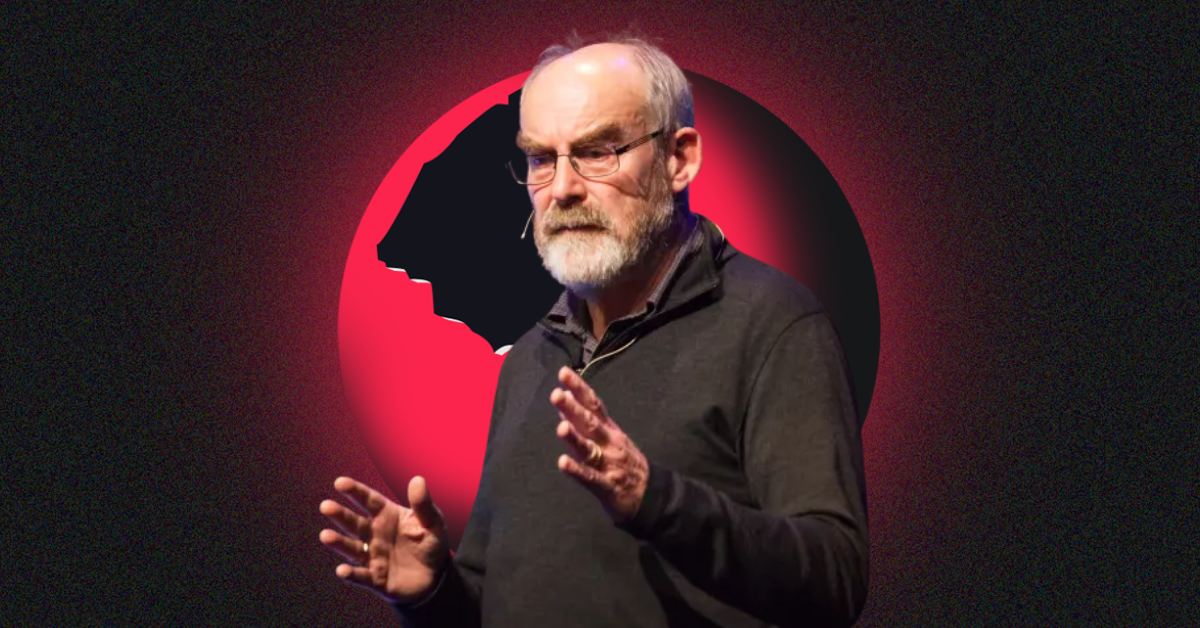
As someone who contributes to many conferences, my approach is often subversive. I don’t seek to bring ‘practical tips’ and ‘inspired solutions’—because I respect that audiences are working amidst complexity. What I bring, instead, are thoughtful provocations, wondrously heretical perspectives, and warmly subversive notions so as to inspire the kind of generative ambiguity that leads people to more readily engage with new ways of seeing and living into the opportunities at hand.
Change to continue
As you know, I’ve been in a deep sabbatical these past four years.
Your favourite wizard became blursed with the metacrisis insight-cascade half a decade ago, and he wouldn’t shut up about it. He thought he had intellectually processed the sorrow that came with it. So clever. But nay; all he had done was suppress it. And this sorrow leaked into his writing and work, bringing about a grim chapter, which saw him finally succumb to the quest that beckoned him deep into the dark forest. And so he stepped through the window of disenchantment, into his own unravelling, and finally began to contend with the grief. Plant medicine may have catalysed an element of this—but it was poetry, myth, good relations and time in the wilds that saw him through. And now, after having given the equivocal Balrog a bit of a what-have-you, he’s back.

Remember, as James P. Carse writes: Only that which can change can continue: this is the principle by which infinite players live. I would hope that, in the past while, you’ve changed, too.
We are living in a time betwixt worlds. “The old world is dying, and the new world struggles to be born,” as the philosopher Antonio Gramsci wrote (whilst imprisoned by a fascist regime). “Now, is the time of monsters.” (to add Žižek spin).
We cannot simply ‘fix’ the old system—because that paradigm is past its half-life. It’s exhausted, maligned, and failing us. But, lo—we also can’t point to any clear ‘solutions’, as nothing has yet coalesced; all is in flux. Nor would we want to—our attempts to ‘fix’ or ‘solve’ perpetuate the paradigm we struggle within.
“In a complex moving system, you cannot simply replace the parts,” Nora Bateson eloquently shares in a relatively new documentary titled Why we need to quit ‘fixing’ the world: a cybernetic approach to planetary challenges.
 Nora Bateson, BA, Hans Busstra, MA
And yet: there are patterns to be found, amidst it all. Potentialities in the penumbra. Glimmers to be gleaned. Leaks to feed. A way that reveals the way, too—if we know where (and how) to look.
Supple acuity
We must develop the capacity to notice the myriad subtle significances that surround us. Does this sound faintly shamanoid? It ought to!
“You’ve got to find ways in which people notice anomalies very quickly, so that they can repurpose,” Dave Snowden explains in conversation with Rachel Donald.
In other words—you’ve got to keep your wits about you.
Widen the aperture
How are we cultivating ways in which to widen the aperture of our ways of seeing?
I particularly like this frame because, to widen the aperture of seeing means to let in more light. This has two effects: on the one side the bright shining obvious will become painful to look at (too bright, too obvious), whereas on the other hand we will tend to notice more of what glimmers in the penumbra.
When everyone looks to the shining obvious headlines and trends—look to the penumbra. Let your eyes adjust to the glimmers in the dark. Seek the gaps in knowledge—either as avenues to explore and contribute to, or as fields to be wary within.
In his conversation with Rachel, Dave says: “I’m a Catholic, right? So to give up hope is a mortal sin. But it doesn’t require me to be optimistic.” In a world blinded by the false light of optimism, I think it makes sense to embrace a bit more clear-sightedness (without abandoning hope—or rather: the hope-beyond-hope).
Come out and play
Instead of seeking outcomes up front, come out of your box and let’s wander about in the woods for a while.
In practical terms, this looks like having a conversation wherein we can, together, sense-into the underlying conditions that give rise to the problems you seek solutions to. In other words: it takes time to warm into it. And so we start small, and cultivate confidence over time.
In this process, you will come to appreciate that promising outcomes in complex contexts is the gambit of charlatans and confidence men who do confidence tricks.[^ As you know, I have a respect for the grift, and I appreciate bullshit artistry. But most isn’t artful.] Reality can be bent to attain outcomes, sure. Most metrics are gamed in this way. And if you’ve a requirement for guaranteed outcomes, we can play that game.
But there’ll be some wiliness that’s needed. It’ll require that we quest amidst, having wit and wisdom enough to hold to the bearing of meaningful progress towards the supposed outcomes whilst also dancing through the necessary pantomimes of a world enamoured within its delusions of progress.
This is what the work looks like: patient, messy, attentive, non-linear, with acuity for sensing what wants to emerge rather than being slaved to past notions about what we think should happen. It’s subtle, meta-rational deftwerk for those willing to dance with Trickster.
Member discussion